2 a.m. Blue screen. Nobody drives anywhere.
The machine's own OS agent goes silent, the KVM takes over on standby power, and a CEC Support session that you approve reads the screen, cycles the power, and watches it come back. Press play.
Eyes on the video. Fingers on the buttons.
Four connections, all of them dumb on purpose. The PC can't tell the KVM from a monitor and a keyboard, which is exactly why it works when nothing else does.
Latency is the difference between watching and driving.
Move your cursor across the panels. The hollow ring is your hand; the glowing dot is what the remote screen would show. Standard capture answers a beat behind; Pro stays glued to you.
external: cec kvm go · internal: cec kvm internal / internal-pro · desk: cec kvm pro
Pick your KVM.
Same job at every price: keep the machine on your graph when its OS can't help. They differ in how sharp they see and where they live.
CEC KVM Go
The new external entry model is on the way. Final specifications, availability, and pricing will be announced before launch.
CEC KVM Internal
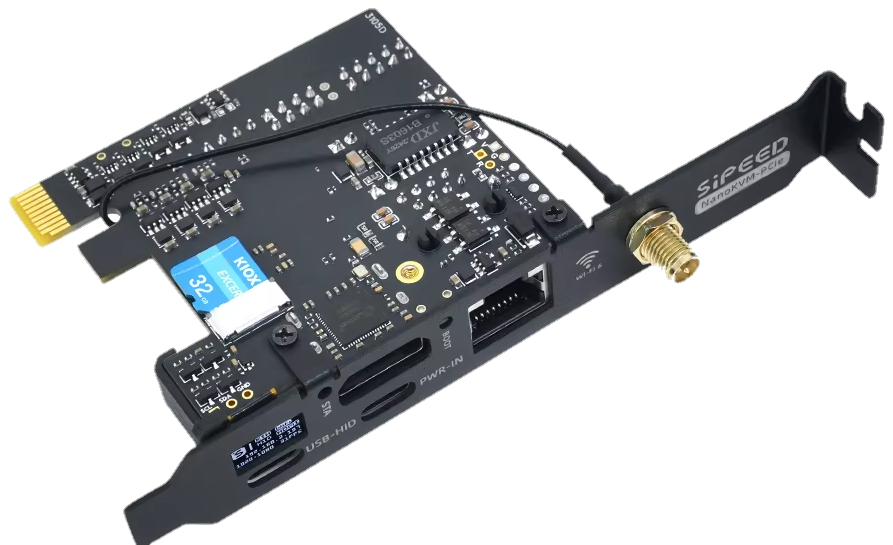
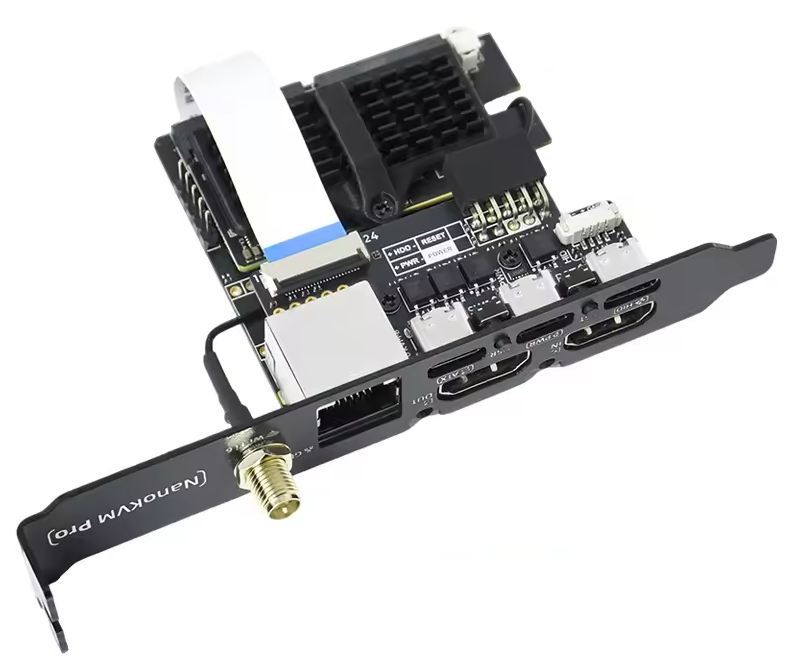
The same platform on a card that lives inside the case: no desk clutter, powered by the PSU's standby rail, wired straight to the front-panel header. Ships standard in every CEC build. The Pro card steps up to 4K capture, gigabit, and Wi-Fi 6.
Full technical specification · CEC KVM Internal / Internal-Pro
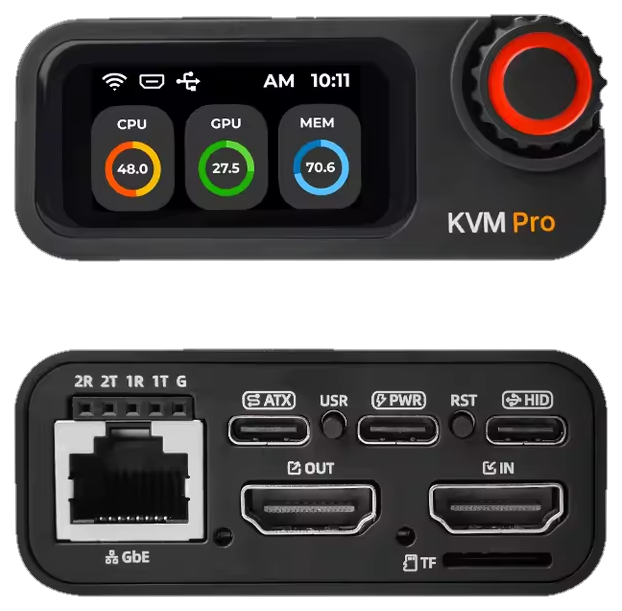
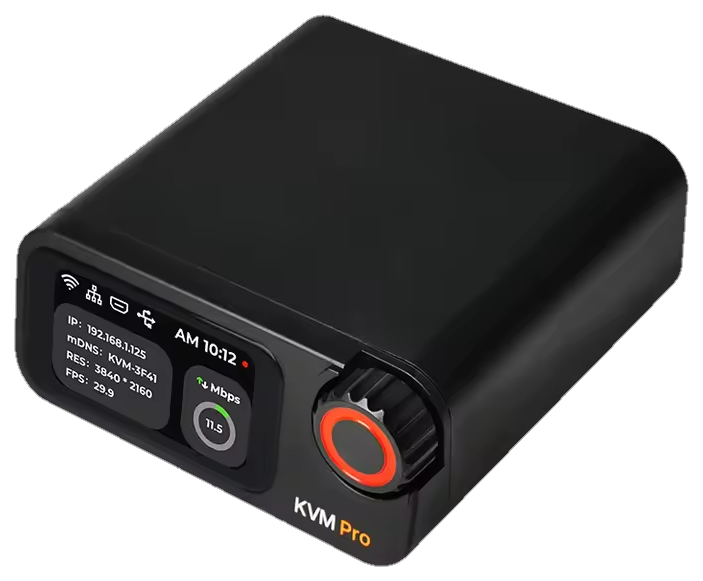
CEC KVM Pro
The desk unit. 4K capture at 20–30 ms, sharp enough to game on remotely, with its own screen telling you what it sees, gigabit plus Wi-Fi 6, and a 4K loop-out so your real monitor stays plugged in. Alive even when the PC isn't.
Full technical specification · CEC KVM Pro
It's just another node on your graph.
No second app, no vendor portal. A KVM claims into your fleet like any laptop: its console opens in the same tab, its power button is a button in the drawer, and sharing it follows the same grants as everything else.
- ▸Claim it with the same one-tap adoption as any device
- ▸Streams ride your mesh, end-to-end encrypted, with relay only when needed
- ▸No second login: approved mesh peers open its console directly, no port forwarding, no exposed web page
- ▸Works without us: CEC KVM, CEC's open firmware fork. No account, no subscription
Out of the box, it's already calling you.
A fresh KVM announces itself on your LAN before it knows the time, before it's touched the internet. Your app hears it, you tap Claim, and it's wearing your name.
It calls out over mDNS on a claim channel that never leaves your network. Clock-free: it works before NTP.
Every device of yours on that LAN shows the newcomer instantly. No IPs typed, no cloud round-trip.
It appears in your claim sheet. Tap Claim, done. Attach it to a machine and it renames itself to match.
allmystuff-local-claim-v1 · clock-free · public claims off by default · mesh transport by MyOwnMesh
A box that can press your power button should answer hard questions.
Connection keys are made and stored on the device, never on a CEC server. Nobody at CEC can connect on their own.
Video travels directly between your devices, end-to-end encrypted. A relay, when needed, only passes data it can't decrypt.
Repair sessions start with your approval, every action is logged, and you can watch live or revoke at any moment.
Firmware and software are open source and self-hostable. No subscription is ever required to use your hardware.
Out-of-band · works with the OS dead · no apps installed on the PC